
Tommie Aaron: A Quiet Force in Baseball History
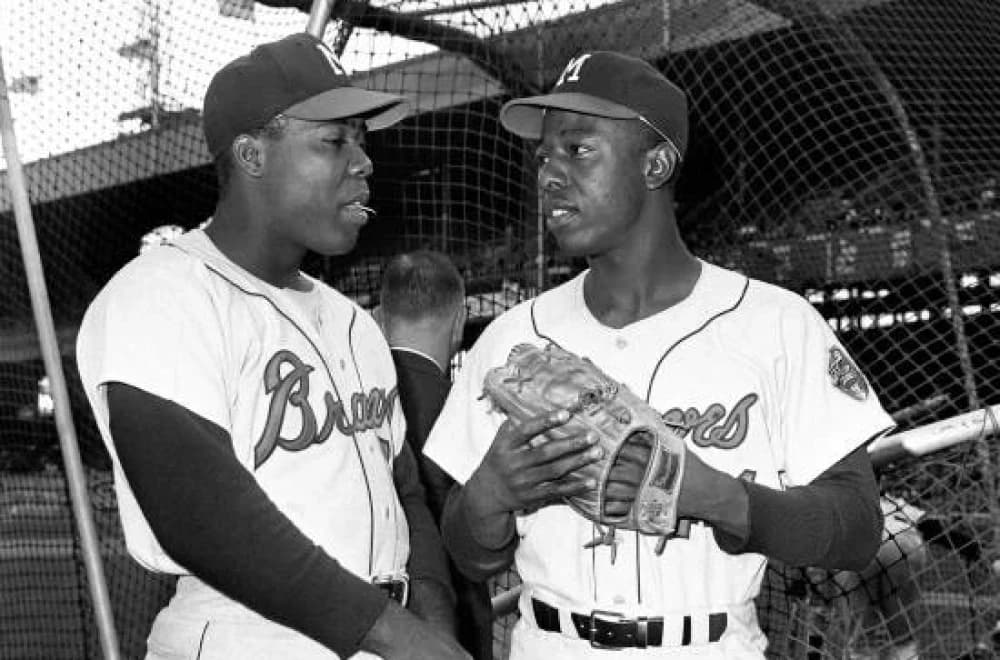
Tommie Aaron’s journey in Major League Baseball reflects resilience and adaptability, showcasing the vital yet often overlooked contributions of players who support the game's stars.
Tommie Aaron, a figure frequently overshadowed by his elder brother Hank, established his own identity in the realm of Major League Baseball (MLB). Born on October 24, 1939, in Mobile, Alabama, Tommie grew up in a household where baseball was ingrained in their lifestyle. His brother, Hank Aaron, is acknowledged as one of the sport's most remarkable players, shattering records and accumulating accolades that would eternally shape his legacy. Nevertheless, Tommie Aaron's path to the major leagues was distinctive in its own way.
Tommie, who played as an outfielder, embodied the quiet determination and resilience that many athletes strive for. In contrast to his brother, who was the prominent figure of baseball for more than two decades, Tommie often maintained a more low-key presence. He was a reliable and versatile player during his nine-year career in Major League Baseball (MLB), contributing to several teams including the Milwaukee Braves, Atlanta Braves, New York Mets, and St. Louis Cardinals. While Tommie’s career statistics may not rival his brother’s remarkable achievements, his contributions to the sport and his ability to overcome numerous challenges have solidified his legacy in baseball history.
Important Career Achievements
Tommie Aaron's career, which lasted from 1962 to 1971, was characterized by determination and the ability to adapt. He made his Major League Baseball debut on April 9, 1962, playing for the Milwaukee Braves, just a year after his brother Hank had already started establishing himself as one of the most intimidating hitters in the sport. Although he played in the shadow of Hank’s significant celebrity, Tommie embarked on his professional career with great optimism.
MLB Debut: At just 22 years old, Tommie made his debut in Major League Baseball, quickly coming to understand the experience of competing in the shadows of a legendary figure. This milestone marked not only a personal success for him but also the start of a lengthy journey in the world of baseball.
Playing Alongside Hank Aaron: A highlight of Tommie’s career was the opportunity to play with his brother, Hank, on the Milwaukee Braves. This was a unique moment in baseball history, as it is uncommon for brothers to share the field on the same major league team, especially with a legendary player like Hank. Tommie spent several seasons with the Braves, offering support and familiarity to Hank while contributing to the team as a reliable utility player.
Tommie’s most notable appearance in postseason play occurred during the 1969 World Series, when the Braves reached this prestigious event. Although the Braves were ultimately defeated by the New York Mets in what is regarded as one of the greatest upsets in MLB history, Tommie’s involvement with the team marked a significant milestone in his career. He had the opportunity to witness and be part of the pinnacle of baseball, despite not being the player who garnered the most attention.
Period with the New York Mets and St. Louis Cardinals: Following his tenure with the Braves, Tommie joined the New York Mets in 1970 and later played for the St. Louis Cardinals in 1971. Even though his stints with these teams were brief, they showcased his versatility within the league and his readiness to step up wherever his contributions were required. Although his career trajectory was not straightforward, it reflected his determination and love for the sport.
Statistical Data
Statistics
Importance
Total Games Participated
437
Number of At Bats
944
Runs Scored
102
Base Hits
Two hundred sixteen
Two-base hits
Twenty-six
Three-base hits
1
Home Runs
13
Runs Batted In
94
Stolen Bases
9
Hitting Average
.229
On-Base Percentage
.292
Slugging Average
.327
On-base Plus Slugging
.619
Perseverance & Revivals
A key aspect of Tommie Aaron’s career was his unwavering resilience. Competing in the same period as his brother Hank, who was the prominent star of the Braves, presented significant challenges for Tommie. As Hank shattered records and gained nationwide recognition, Tommie often found himself under the shadow, perceived as a secondary player. Despite this, he remained undeterred, allowing neither the pressure nor the spotlight to diminish his performance or his love for the game.
Tommie’s resilience was evident in his ability to adapt to various teams throughout his career. He transitioned between the Braves, Mets, and Cardinals, often struggling to secure a stable position in the lineup. Nonetheless, he remained committed to his skills, consistently preparing himself for opportunities when they arose. His nearly ten-year tenure in the major leagues stands as a testament to his perseverance and resolve.
In 1970, following several seasons with the Braves, Tommie was traded to the Mets. Although this transition was challenging for him, as he was leaving behind his brother and the team he had been a part of for many years, Tommie remained undeterred. During his brief time with the Mets, he continued to be a valuable asset, demonstrating his resilience by contributing effectively on both offense and defense as required.
Heritage
While Tommie Aaron’s legacy may not be as prominent as that of his brother Hank, it remains significant in the annals of baseball history. Tommie’s influence on the sport is rooted not merely in his statistics or achievements but in the resilience, commitment, and adaptability he demonstrated throughout his career.
Competing alongside Hank Aaron in Milwaukee, Tommie was part of a remarkable period in Braves history. While Hank’s feats on the field are extensively recorded and celebrated, Tommie’s significance as a brother and teammate is equally important. His bond with Hank introduced a distinct aspect to the Braves' clubhouse, fostering a sense of unity during their shared experience.
Tommie’s impact on the game is also reflected in the way he stepped up for his teams when they needed him most. Whether participating in the World Series or serving as a reliable presence in the outfield, Tommie exemplified the type of player every team values yet frequently overlooks. His adaptability and strong work ethic made a significant impression on his teammates and those who played alongside him.
Future Perspectives
As time goes on, Tommie Aaron's contributions to baseball may receive greater recognition, especially as the focus on the Aaron family's influence on the sport increases. Although Hank will always be remembered for breaking Babe Ruth's home run record and transforming the game, Tommie's narrative serves as a reminder of the players who stand behind the stars, supporting them from the sidelines.
Looking ahead, as the world of baseball commemorates Hank Aaron's legacy, Tommie is likely to be remembered not only as Hank’s brother but as an essential figure in the Aaron family's impact on the sport. While his historical significance may never rival that of Hank, it is nonetheless meaningful, characterized by resilience, adaptability, and a deep passion for baseball.
The narrative of Tommie Aaron will endure as an essential part of the vibrant history of baseball’s golden age—a tribute to individuals who dedicate themselves, overcome obstacles, and make an impact on the game in their unique, often understated, manner. His journey acts as a reminder that each player, whether in the limelight or not, plays a vital role in the broader story of the sport.